Metal Versus Acetate Frames: Which Has More Edge?
A frame can make a black tee look intentional, turn a festival fit into a full-on character, or kill the mood before you leave the house. That is why metal versus acetate frames is not a minor material debate. It is a choice about silhouette, comfort, durability, and how loudly your sunglasses speak before you do.
Metal brings industrial shine, sharp lines, and a little danger. Acetate brings sculpted volume, rich color, and vintage weight. Neither is automatically better. The right one is the pair that matches your face, your routine, and the kind of entrance you plan to make.
Metal versus acetate frames: the visual difference
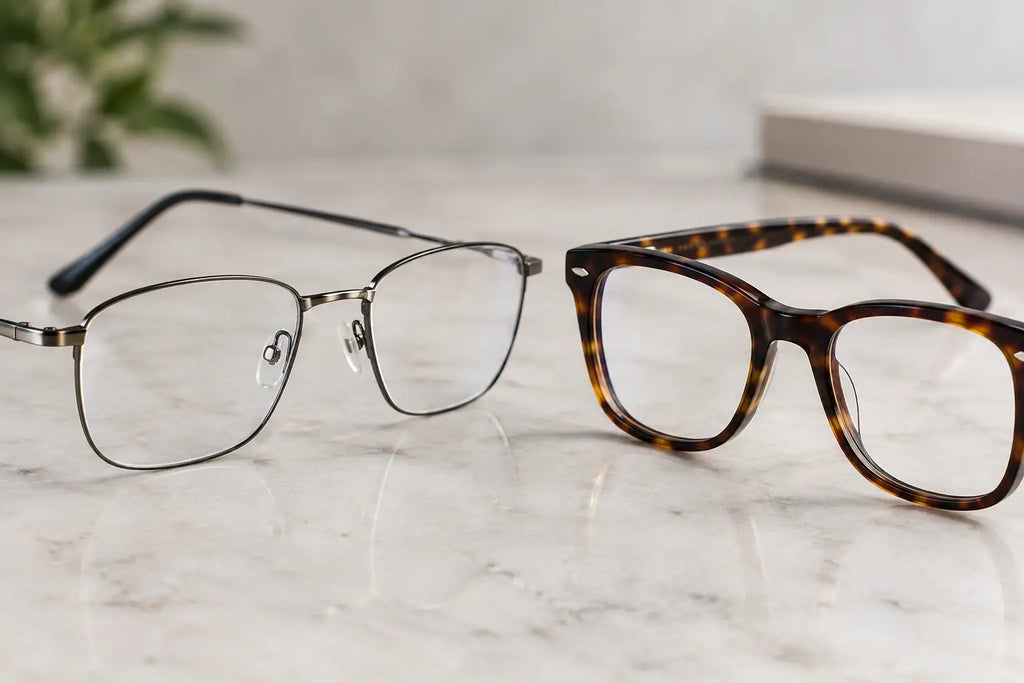
The fastest way to tell these materials apart is simple: metal frames draw with lines, while acetate frames draw with blocks of color and shape.
Metal frames tend to feel leaner and more architectural. Think narrow temples, defined bridges, exposed hardware, and finishes that catch light - Gunmetal, polished Silver, dark Jet Black, or Gold that refuses to play background. They work especially well when you want the lenses and frame geometry to do the talking. Round wire sunglasses can go old-world and occult. Angular metal shades can hit cyberpunk, racing, or late-night city energy.
Acetate is a plant-based plastic material molded into thicker forms. It creates more visual mass around the eyes, which is why it dominates classic chunky wayfarers, bold square sunglasses, and many retro statement frames. A black acetate frame reads confident and grounded. Translucent colors, tortoise patterns, and layered laminations add depth that metal cannot mimic in quite the same way.
If your wardrobe runs toward leather, denim, boots, silver jewelry, utility pieces, or monochrome streetwear, metal often lands with more precision. If you love vintage tees, oversized shirts, bold prints, or a heavier rock-and-roll outline, acetate can give the entire look a stronger foundation.
Why metal frames hit differently
Metal is for people who notice details. The small flash at the hinge. The contrast between a gold rim and an amber lens. The way a thin frame makes a colored lens look even more unreal.
Lighter on the face, sharper in profile
Many metal sunglasses feel lighter than chunky acetate styles because the material can be formed into thin components. That can be a major win for long drives, all-day events, and hot afternoons when heavy frames start to feel like a helmet.
The profile is also cleaner. Metal lets you wear a larger lens without adding a huge amount of frame bulk, so it can open up the face rather than cover it. Aviator-inspired shapes, round lenses, hexagonal rims, and double bridges all get their edge from this stripped-back construction.
That said, lightweight does not always mean effortless. A very thin metal frame can feel more noticeable at the nose if the pads are not adjusted well. Fit matters more than the material label.
More adjustable where it counts
Metal nose pads are one of the biggest practical advantages. They can often be adjusted to sit higher, lower, wider, or narrower, helping keep lenses away from your cheeks and lashes. That is useful for lower nose bridges, narrower faces, or anyone who has dealt with sunglasses sliding down at the worst possible moment.
Metal temples can also offer some adjustment from a qualified optical professional, depending on the design. It is a small detail with a big payoff. A frame that stays put looks better because you are not constantly pushing it back into position.
The trade-off: bends and finish wear
Metal is durable, but it is not invincible. Thin frames can bend if they are crushed in a bag, sat on, or treated like they have nine lives. Coated finishes may eventually show wear at high-contact points, especially if sunglasses are tossed loose with keys and coins.
That does not make metal fragile. It means you should use the case. Nero Sunglasses includes a premium-stitched origami case for exactly this kind of real-life protection. Store the pair when it is not on your face, and the finish stays fierce longer.
Why acetate frames own the bold look
Acetate does not whisper. Even in black, it has presence. Its thickness creates a strong border around the lens and can make a simple outfit feel fully styled in seconds.
Bigger shapes, bigger personality
Because acetate can be molded and sculpted, it is ideal for dramatic brow lines, wide temples, beveled edges, and thick square profiles. It gives designers room to exaggerate proportion. That is what makes an acetate frame such a reliable move when your sunglasses need to become the centerpiece.
Acetate also carries color beautifully. Matte black feels different from glossy black. Smoke gray can look dimensional. Tortoise has depth. Transparent tones can shift with the light. If you want the frame itself to be as expressive as the lenses, acetate gives you more surface area to work with.
A smooth, integrated fit
Unlike many metal designs, acetate frames usually rest directly on the bridge of the nose rather than on separate pads. Some people love that smooth, unified feeling. There are no nose pads to catch in makeup, snag hair, or leave small pressure marks.
For medium to wider faces, a well-sized acetate frame can feel secure and balanced. The catch is that fit is less adjustable. If the bridge is too narrow, too wide, or too low for your nose, the frame may slide, pinch, or sit against your cheeks. Heat adjustments are possible for some acetate frames, but that is not a home experiment. Leave it to a pro.
The trade-off: weight and heat
Thick acetate tends to weigh more than slim metal. For some, that feels substantial and premium. For others, especially during long wear, it can create pressure behind the ears or on the nose.
Acetate can also react to heat. Leaving sunglasses on a dashboard in serious summer sun is a bad move for any pair, but acetate is especially vulnerable to warping when heat gets extreme. Treat statement frames like the statement piece they are.
Choose for your face, not a rulebook
Face-shape advice is useful until it becomes a prison. You do not need to wear round frames because someone called your face square. You need a frame that fits well and looks like it belongs to you.
Still, proportions can point you in the right direction. Metal round frames often soften angular features without adding bulk. Narrow metal rectangles can sharpen a softer or rounder face. Chunky acetate squares can add structure to oval and round faces, while upswept acetate silhouettes bring lift to a longer face.
The width is more important than most people realize. The frame should generally align with your face rather than stopping far inside it or extending dramatically beyond your temples. A little oversized attitude is great. Constant slipping is not.
Pay attention to the bridge and lens position, too. If the lens bottoms sit on your cheeks when you smile, try a different bridge shape or a metal frame with adjustable pads. If a metal frame feels too delicate against your features, acetate may give you the visual weight you want.
Match the material to the moment
For nightlife, concerts, festivals, and photos where every detail counts, metal frames bring reflection and edge. A Gold frame with red lenses looks red hot under venue lights. Gunmetal with charcoal lenses feels colder, darker, and more controlled. Metal also plays exceptionally well with chains, rings, watches, and other hardware-heavy accessories.
For everyday wear, acetate can be the easy grab. A square black frame works with coffee runs, creative-office fits, weekend drives, and low-effort outfits that still need a point of view. It has enough visual presence to carry a plain sweatshirt or vintage tee without asking for anything else.
For travel, either material works if the fit is right and the pair is protected. If you are packing light, a metal style may offer less bulk. If you want one pair that holds its own in every photo, a bold acetate silhouette can earn the space in your bag.
Durability is mostly about how you wear them
The material matters, but habits matter more. Metal can bend. Acetate can warp or crack under major impact. Lenses can scratch regardless of what holds them.
Use both hands when taking sunglasses off. Do not wear them on top of your head if you can avoid it - that stretches temples and transfers hair product to lenses. Rinse dust away before wiping, use a clean microfiber cloth, and keep them in a protective case instead of the bottom of your tote.
Accidents still happen. That is style life. A 30-day accidental damage protection policy can make choosing a bolder pair feel less like a gamble and more like permission to wear them hard.
The frame that wins is the one you reach for
Choose metal when you want precision, shine, adjustable fit, and an industrial silhouette that cuts through the crowd. Choose acetate when you want volume, color, vintage muscle, and a frame with undeniable visual weight.
Or ignore the false choice and keep both in rotation. A lean metal pair for nights when the fit needs a spark. A thick acetate pair for days when subtle is not on the schedule. Do not follow the frame everyone else is wearing. Put on the one that makes the rest of the outfit catch up.